Vibration Control for High-Speed E-Motor Test Benches (EV & Aerospace)
At high rotational speeds, vibration becomes the primary risk factor impacting the accuracy, reliability, and safety of e-motor test benches.
Why vibration control is critical in e-motor testing?
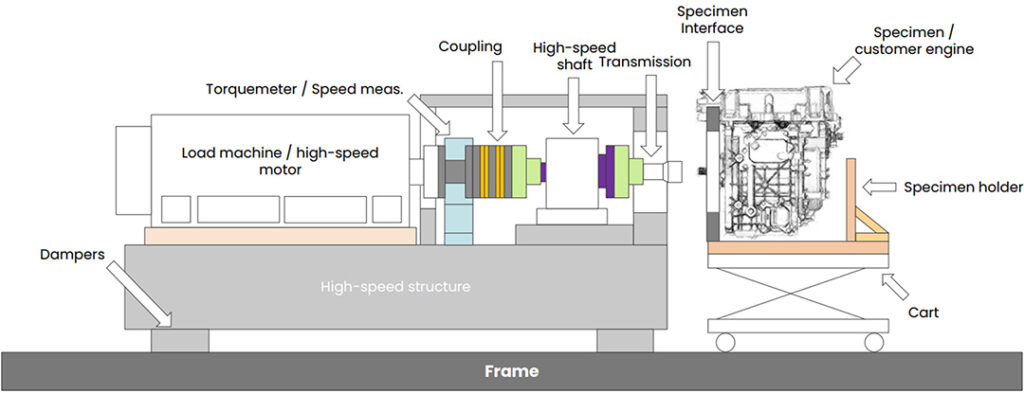
A high-speed e-motor test bench behaves as a coupled dynamic system (motor, dynamometer, shaft line, and structure). Without proper vibration control, this can lead to:
- Measurement errors (torque, efficiency, NVH correlation)
- Premature wear of components (bearings, couplings, sensors)
- Reduced repeatability and increased downtime
- Safety risks during overspeed and transient test profiles
Typical vibration sources in e-motor test benches
Common vibration drivers on an e-motor test bench include:
- Residual imbalance and rotor tolerances
- Misalignment at the motor–dynamometer interface
- Coupling and driveline dynamics, including overhung masses
- Bearing harmonics and assembly effects
- Electromagnetic excitation (torque ripple, inverter harmonics)
- Structural resonance (frame and foundation interaction)
ENORISE approach to vibration-controlled test benches
ENORISE integrates vibration control from the early design phase to ensure stable and reliable high-speed operation:
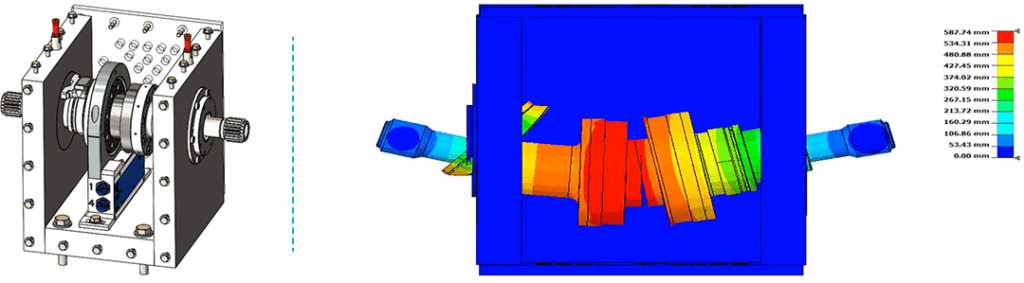
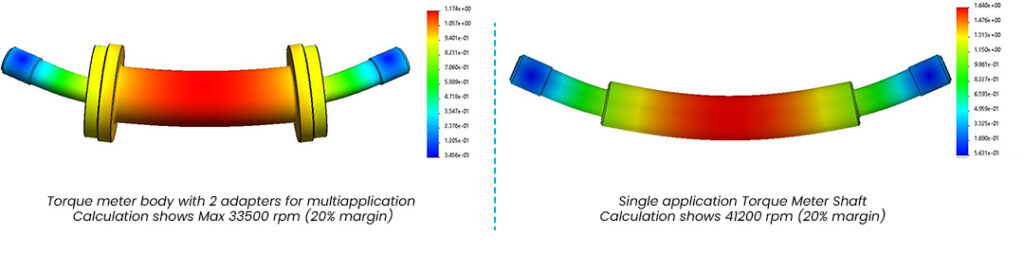
- Rotordynamics and critical speed management (shaft line architecture, stiffness and mass optimization)
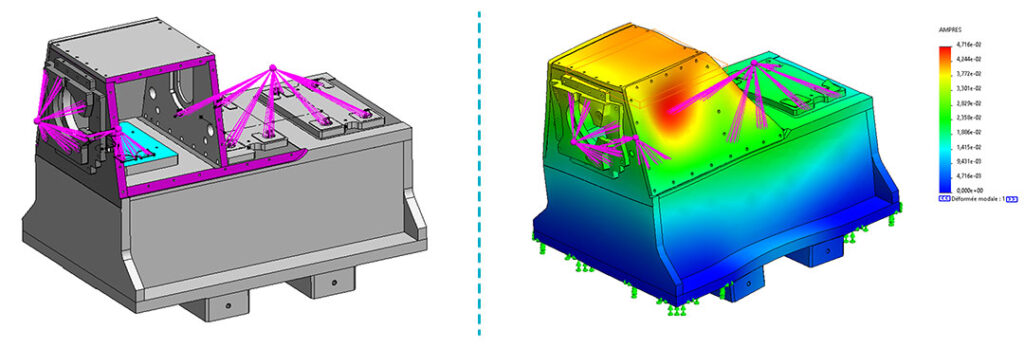
- Structural engineering to reduce resonance amplification
- Alignment-ready interfaces to improve repeatability and reduce vibration risks
- Integrated vibration monitoring and protection logic for safe operation
- Optional NVH-ready systems with synchronized measurement for noise and vibration correlation
Aerospace applications: eVTOL propulsion and actuator testing
Aerospace electric motors require stricter vibration control due to higher rotational speeds, low-noise constraints, and safety-critical validation.
ENORISE supports aerospace programs with high-speed testing solutions for:
- Electric propulsion systems (eVTOL and hybrid-electric)
- Electric actuators
With project-specific safety and environmental configurations.
Benefits of vibration-controlled test bench design:
Choosing ENORISE means:
- Cleaner and more reliable data for torque, efficiency, and NVH testing
- Extended component lifetime (bearings, couplings, torque meters)
- Faster troubleshooting through vibration monitoring and signature analysis
- Improved safety with vibration-based protection and shutdown logic
FAQ - Vibration control in e-motor test benches
Why is vibration critical for high-speed e-motor test benches?
Because vibration impacts measurement accuracy, bench lifetime and safety, and increases rapidly with speed.
What are the main vibration sources on an e-motor bench?
Imbalance, misalignment, bearing harmonics, driveline dynamics, electromagnetic torque ripple, and structural resonance.
Can ENORISE support NVH testing?
Yes. ENORISE benches can be designed as NVH-ready systems with vibration monitoring and synchronized acquisition options.
Does ENORISE support aerospace electric motor testing?
Yes. ENORISE supports aerospace programs for eVTOL propulsion and actuator validation.